
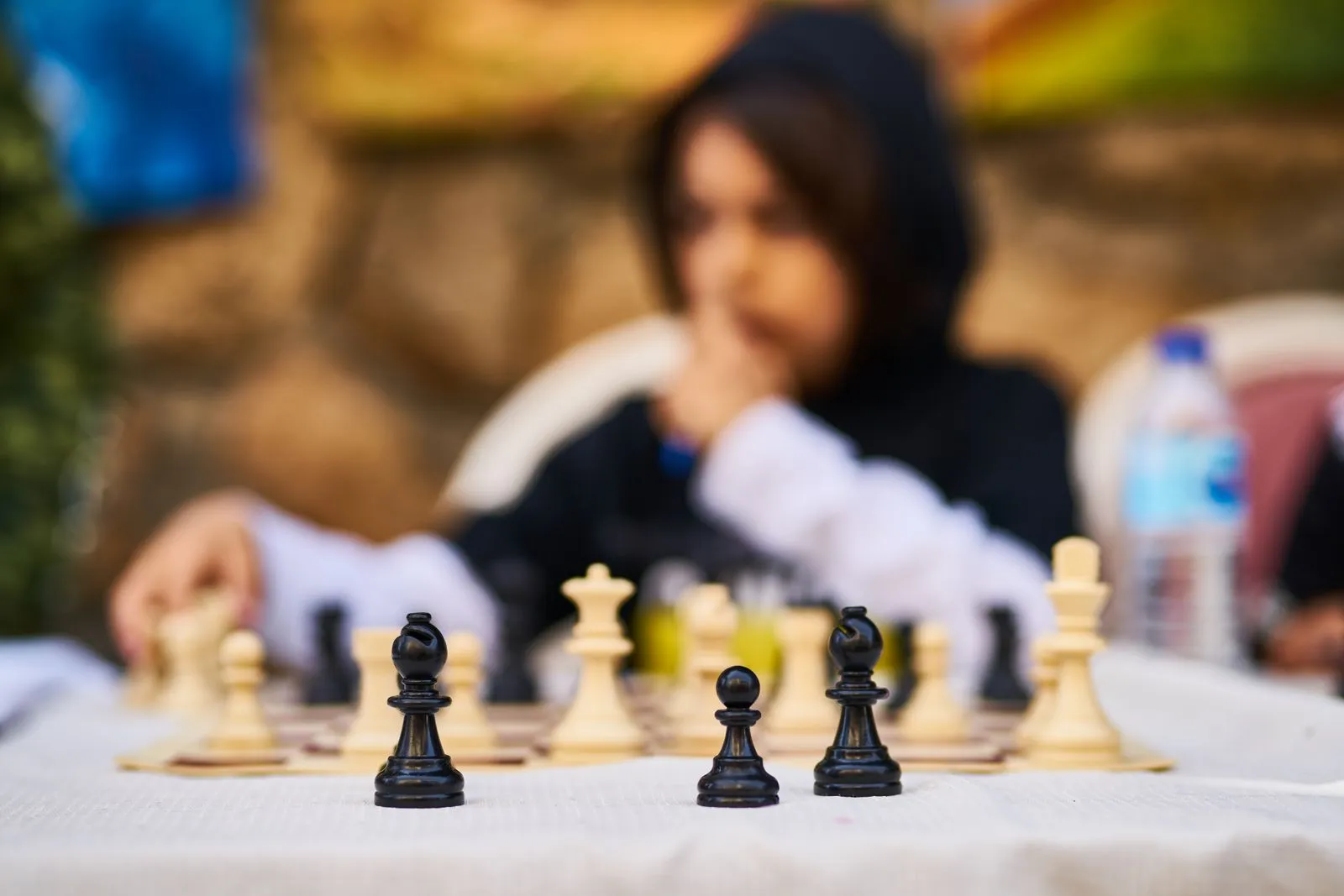
New players often want to learn clever attacks first, but steady progress starts with understanding the board and protecting your pieces. Learn how each piece moves, what check means, and when a move is legal. Then practise noticing threats and finishing a game with a simple checkmate. These foundations help beginners avoid common mistakes and make each move with a clear purpose, whether they are playing casually or preparing for a junior competition.
Learn the Rules and Moves
Start by learning how each piece moves: pawns move forward and capture diagonally, knights jump in an L shape, and bishops travel diagonally. Rooks move along ranks and files, while queens combine rook and bishop movement. Kings move one square in any direction, but never onto a square attacked by an opponent.
Know the difference between check and checkmate. Check means the king is under attack and must be made safe immediately. A player can respond by moving the king, capturing the attacking piece, or blocking the attack when possible. Checkmate means no legal move can remove the threat. Also learn castling, pawn promotion, and en passant so you can recognize these special moves during a game.
Keep Pieces Safe
Before moving, ask what your opponent’s last move attacks. Look for pieces that are undefended or attacked more times than they are protected. A piece is not automatically safe because it sits near your king or other pieces; check whether an opponent can capture it without losing more in return.
Use a simple move routine: check for your king’s safety, identify your opponent’s threats, then choose a move that develops a piece or protects a useful square. After deciding, pause and scan the destination square. This final check helps catch pieces left en prise—available to be captured—or moves that expose your king.
Recognize Basic Checkmates
Beginners benefit from practising a few common mating patterns rather than memorizing long sequences. Learn how a queen and king can work together to drive a lone king to the edge of the board, and how two rooks can restrict the king along ranks or files. In both cases, the attacking king must help control escape squares.
Also watch for back-rank checkmate, where a rook or queen attacks a king trapped behind its own pawns. When defending, leave the king an escape square when appropriate, or keep a piece ready to block or capture the attacker. Practise these patterns from simple positions so you understand why the king has no safe reply, not just which move delivers mate.
Build Useful Game Habits
In the opening, develop your knights and bishops, work toward controlling the center, and castle when it is safe. Avoid moving the same piece repeatedly without a reason, and do not bring the queen out early if the opponent can gain time by attacking it. These habits help your pieces join the game while keeping your king protected.
After each game, review the moments when you lost a piece, missed a threat, or had a chance to checkmate. Find the first mistake and ask what you could have noticed before moving. Short, regular practice with a board and chess puzzles can reinforce this routine. Focus on making legal, safe moves consistently before trying to play quickly.
A beginner’s strongest first steps are simple: know the rules, check for threats, learn a few mating patterns, and review each game honestly. These habits make chess easier to understand and give practice a clear purpose. For structured practice and games with other young players, Geelong Junior Chess is one local option to explore.